Fitness
Built to Last: How Scottie Scheffler Trains His Body for Consistency
With help from GolfForever’s director of performance Troy Van Biezen, Scottie Scheffler has developed a fitness routine designed for more than power. It’s about mobility, stability and performing his best when it matters most.
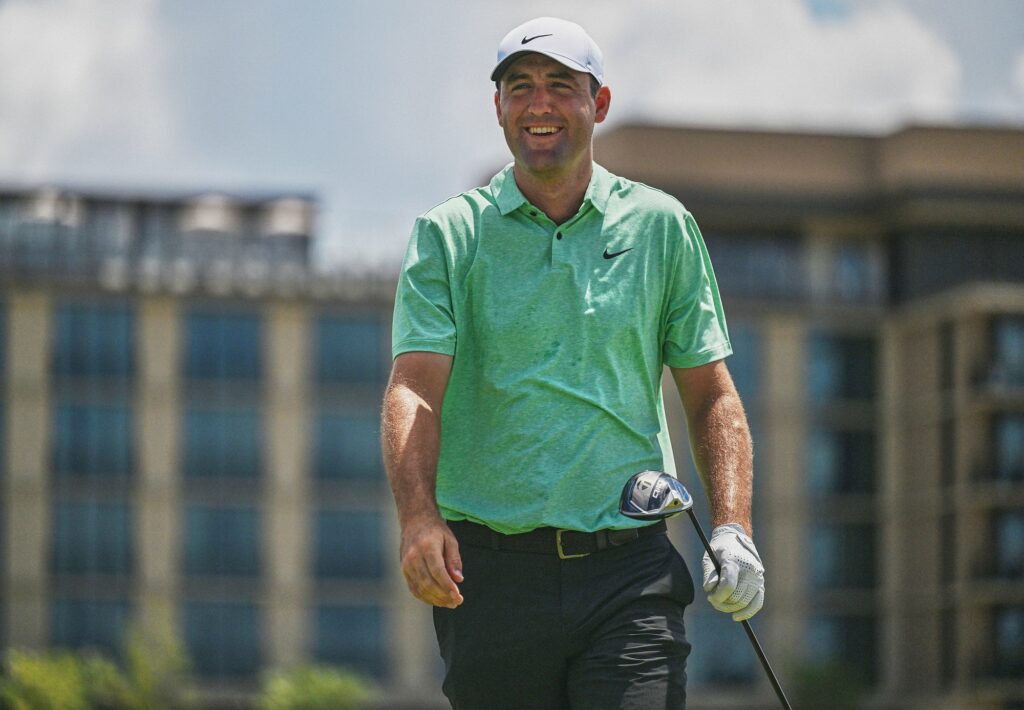
Scottie Scheffler’s golf swing is one of the most recognizable in the game. His feet move, his right foot slides and his body seemingly defies convention as he delivers one precise shot after another.
But behind that unusual motion is a fitness program designed to keep his body healthy, his swing repeatable and his energy level high during a grueling PGA Tour season.
For Scheffler, training isn’t simply about getting stronger or hitting the ball farther. It’s about preparing his body to perform consistently, whether he’s standing on the first tee Thursday or facing a crucial shot late Sunday.
A central figure in that preparation is Scheffler’s longtime trainer, Dr. Troy Van Biezen, who also serves as GolfForever’s director of performance.
“I think in the last two years I’ve taken much more of a priority in my physical health,” Scheffler said in a 2024 PGA Tour interview. Not coincidentally, that was the year he won eight times, including the Masters and the Olympic gold medal. “A huge part of my daily routine is making sure I’m physically ready to go, and my trainer, Troy [Van Biezen], has been a huge part of that.”
Their relationship dates to Scheffler’s teenage years, when he began seeing Van Biezen because of back issues. Van Biezen recognized that Scheffler’s distinctive swing placed considerable demands on his body. Improving mobility through his hips and mid-back became an early priority.
As Scheffler progressed professionally, the focus expanded to strength, stability, rotational movement and endurance. The objective wasn’t to change his swing. It was to build a body capable of supporting it. GolfForever resistance-training later became part of that approach, integrated into his workouts and pre-round warmups.
“With Scottie, he’s very, very strong,” Van Biezen told Sports Business Journal in 2022. “It’s just now, with GolfForever, what I really like is it just helps a lot with the stability and mobility patterns.”
One particular concern emerged during Scheffler’s early years on tour – fatigue late in tournaments. Van Biezen believed Scheffler needed greater cardiovascular endurance to maintain his performance through four rounds.
Scheffler began incorporating GolfForever into his off-week workouts in 2021. By early 2022, its portable resistance-training equipment had become part of his tournament preparation. He won his first four PGA Tour titles that year, including his first of two green jackets.
At home, the emphasis is on developing strength, endurance and overall physical capacity. During tournament weeks, the focus shifts toward maintaining mobility, activating muscles and preparing his body for competition without unnecessary fatigue.
At the 2022 PGA Championship, for example, Scheffler arrived at the event’s mobile gym two hours before his first-round tee time. Van Biezen estimated that the GolfForever Swing Trainer accounted for 85 percent of his warmup.
The distinction between a workout and a warmup is important. A workout develops the physical qualities a golfer needs over time. A pre-round warmup prepares those qualities for immediate use. Rather than exhausting muscles, Scheffler’s warmup emphasizes controlled rotation, balance, hip mobility and stability.
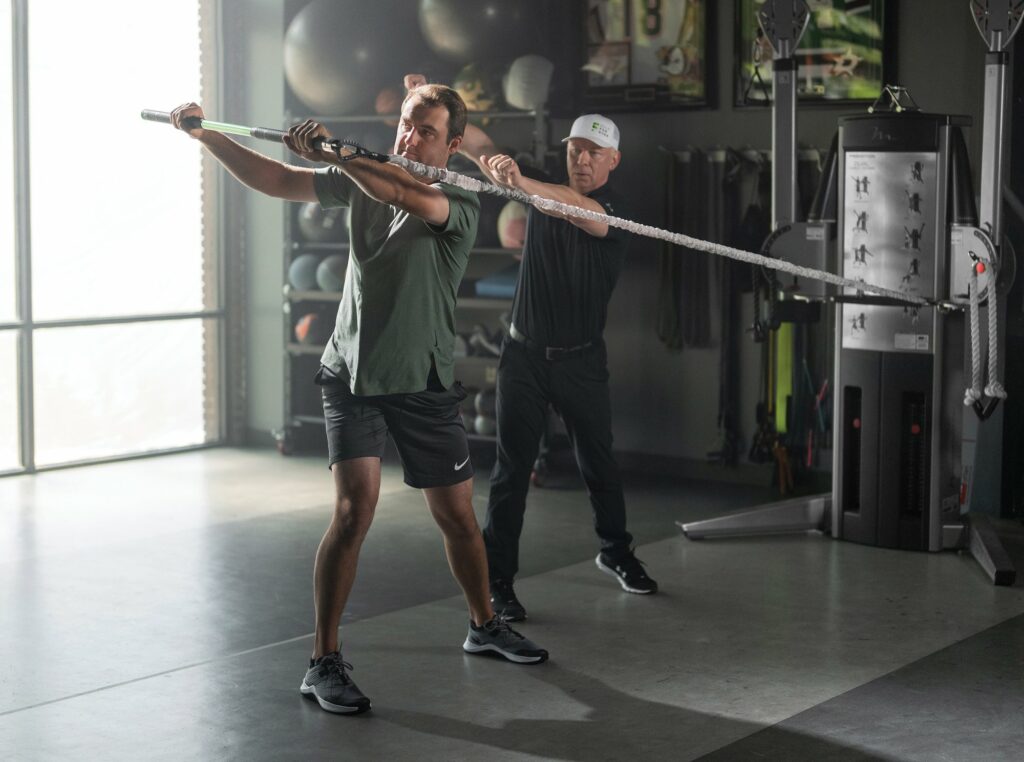
A five-exercise GolfForever routine demonstrated by Scheffler and Van Biezen provides a window into that approach. The movements emphasize rotational mobility, balance and lower-body stability, preparing his body for the demands of the golf swing without creating unnecessary fatigue.
“We’re creating movement patterns in the gym that translate to the golf course, helping load the right side for a more repeatable swing,” Van Biezen told GOLF.com.
Just as important is the individualized nature of Scheffler’s training. Van Biezen uses movement assessments, baseline testing and 3D motion capture to identify physical limitations and asymmetries. He then adjusts exercises and resistance to address those needs.
“Now I’m training myself in the gym on how to move properly on the course,” Scheffler told GOLF.com. “And, when I’m out there, I don’t have to think as much to swing the way I need to swing.”
Most amateurs don’t have Scheffler’s physical abilities, training schedule or access to a personal performance coach, but they can apply the same fundamentals. The GolfForever training system pairs the Swing Trainer with an app featuring guided, golf-focused workouts, including many of the routines Van Biezen uses with Scheffler.
For everyday golfers, that guidance takes the guesswork out of where to start and what to do, whether they’re building strength at home or warming up before a round. The goal isn’t to train like a tour professional. It’s to move more comfortably, feel better prepared to play and keep enjoying the game.
Perhaps the most valuable lesson is consistency. An occasional strenuous workout cannot replace a sustainable routine built around improving movement and maintaining physical health.
“I’ve always said the game of golf is a marathon, not a sprint,” Van Biezen told Sports Business Journal.
For Scheffler, that philosophy helps explain why his preparation extends well beyond the practice range. The goal isn’t simply to produce one powerful swing. It’s to have the strength, mobility, stability and endurance to produce quality swings repeatedly.
And while most golfers will never hit a golf ball like Scottie Scheffler, they can learn something from the way he prepares his body to do it.
The Biggest Takeaway?
Scheffler’s preparation isn’t about pushing his body to exhaustion before a round. It’s about getting his muscles activated and his body moving efficiently. For everyday golfers, a few minutes of controlled, golf-specific movement before teeing off can be a practical place to start.
1. Split-Stance Rotation
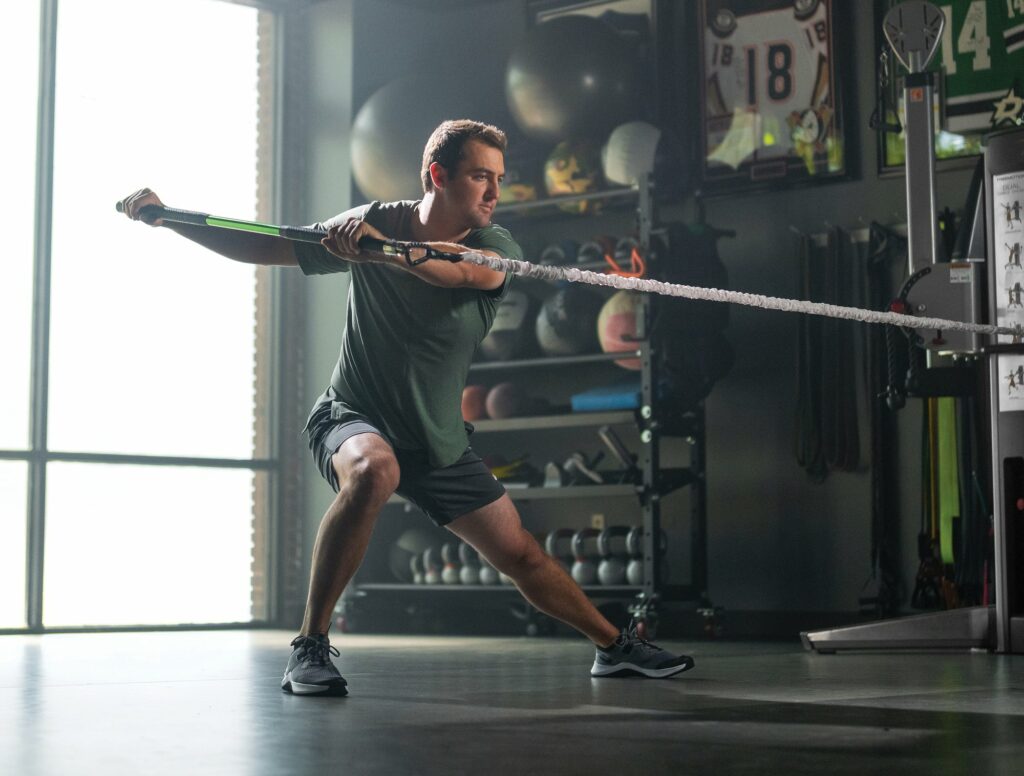
With one foot forward and the other behind, rotate your upper body in a controlled motion. This exercise helps develop rotational mobility while challenging balance and stability – essential ingredients for a repeatable golf swing.
2. Single-Leg Eccentric Lateral Hold
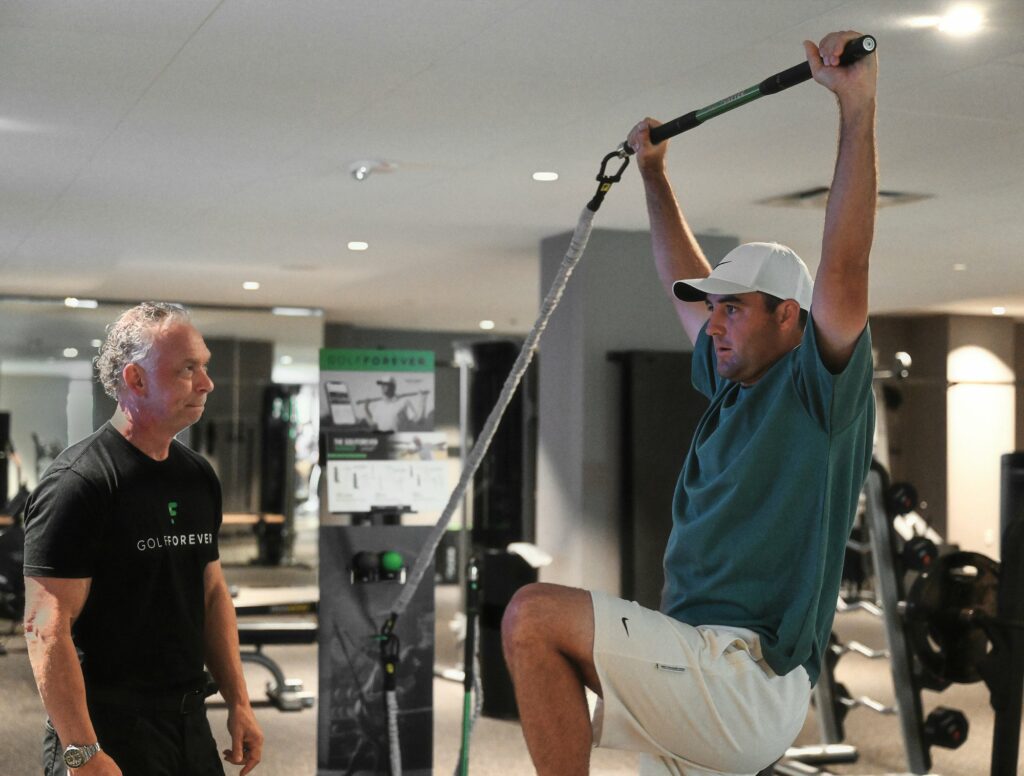
This movement challenges the glutes, core and lower-body stabilizers, helping golfers develop better control of side-to-side movement. Recreational golfers can begin with light resistance and use a stable support for balance.
3. Side Lunge Hold With Rotation
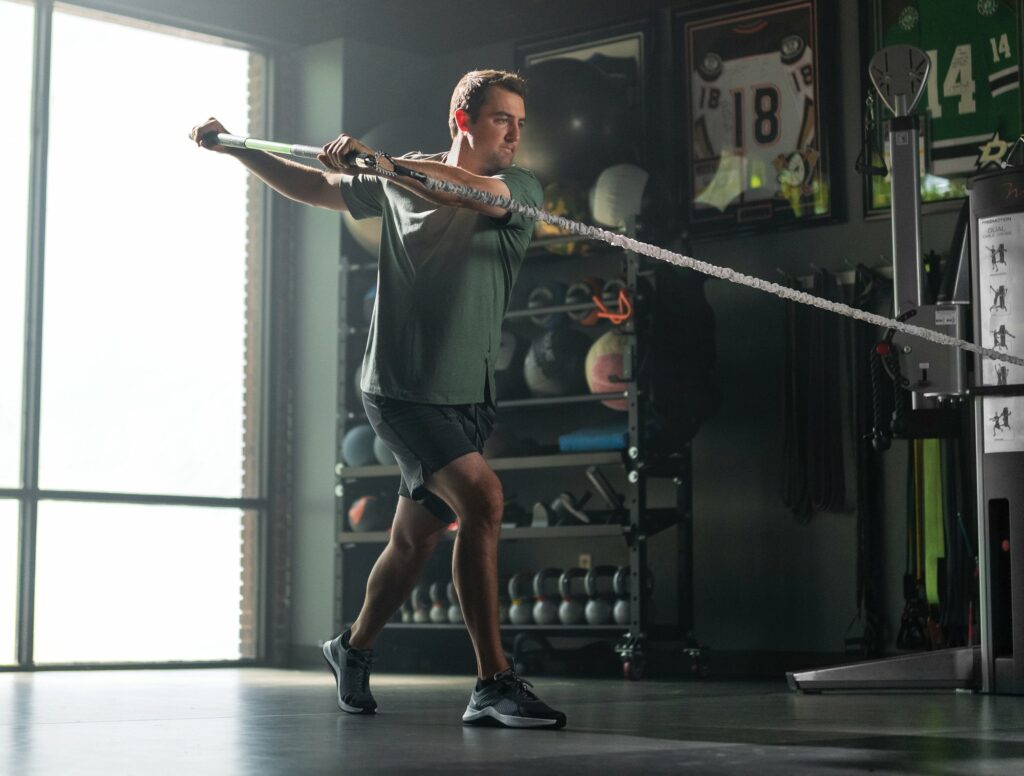
Combining a lateral lunge with upper-body rotation, this exercise encourages hip mobility, lower-body stability and separation between the upper and lower body. Beginners can use a shallower lunge and a smaller rotation.
Healthy Golf content is for general information only and is not medical advice. Talk to your doctor before starting a new exercise, nutrition or recovery program.